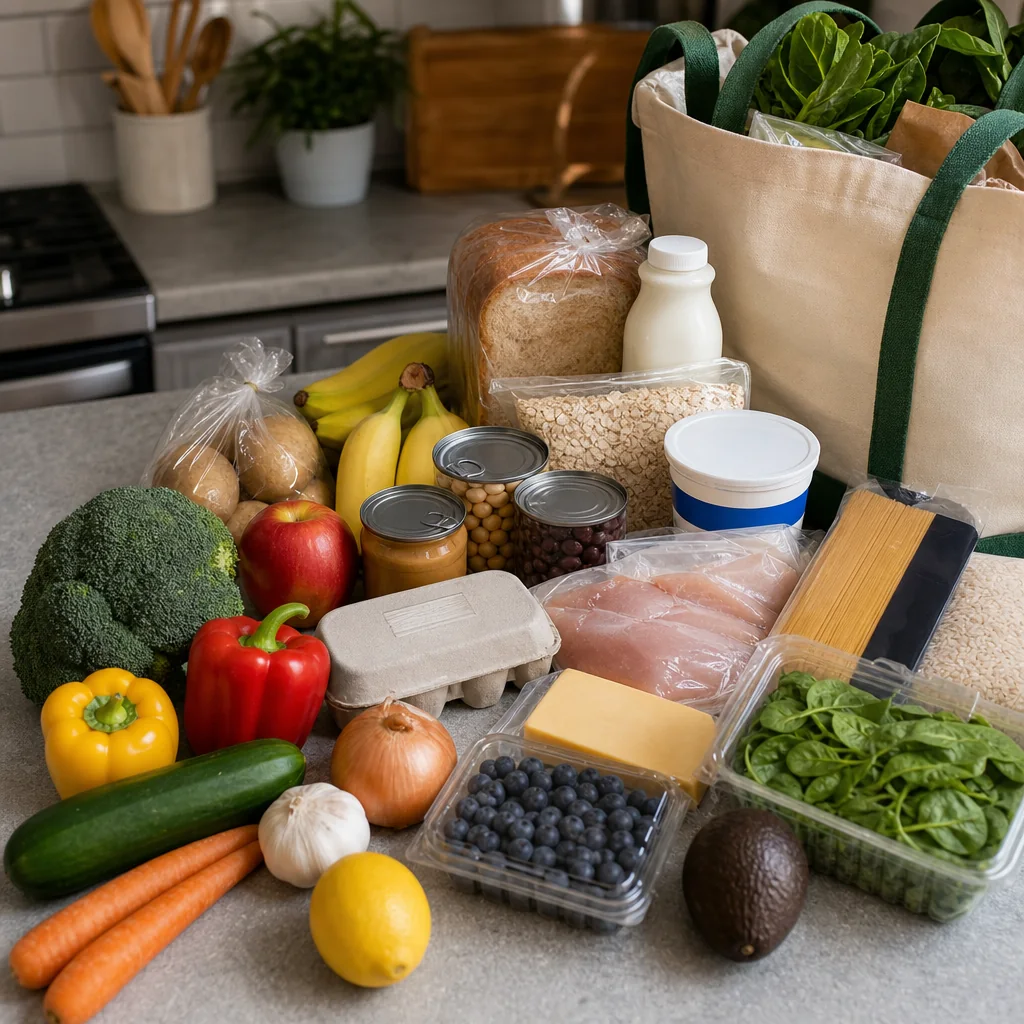
A practical grocery list for one person should cover about a week without leaving lots of half-used ingredients. This version assumes an omnivorous diet, simple home-cooked meals, and basic seasonings already on hand.
One-week grocery list
Produce
- 4 bananas
- 3 apples or oranges
- 1 pint berries or a small bunch of grapes
- 1 bag spinach or mixed greens
- 1 head broccoli
- 2 bell peppers
- 1 cucumber
- 3–4 tomatoes
- 1 small bag carrots
- 1–2 onions
- 1 bulb garlic
- 3 medium potatoes or sweet potatoes
- 1 avocado
- 1 lemon or lime
Choose frozen berries, broccoli, or spinach if you often struggle to finish fresh produce before it spoils.
Protein
- 6 eggs
- 1 pound chicken breasts or thighs
- 2 cans tuna, salmon, beans, or chickpeas
- 1 small tub Greek yogurt
- 1 block tofu or a second can of beans
- 1 small package sliced cheese or shredded cheese
Grains and bread
- 1 loaf bread, preferably freezable
- 1 package tortillas
- 1 small bag rice or quinoa
- 1 box pasta
- 1 container oats
Refrigerated items
- ½ gallon milk or plant-based milk
- 1 small container butter
- Hummus or another sandwich spread
Pantry and freezer
Buy only what you do not already have:
- Olive oil
- Salt and pepper
- One versatile seasoning blend
- Soy sauce or hot sauce
- Peanut butter
- Pasta sauce
- 1–2 cans diced tomatoes
- Frozen mixed vegetables
- Frozen individual meals or soup for one low-effort dinner
- Popcorn, crackers, or nuts for snacks
Meals this list can make
Breakfasts: oatmeal with banana and peanut butter, eggs with toast, or yogurt with fruit.
Lunches: tuna sandwiches, hummus-and-vegetable wraps, chickpea salad, or leftovers from dinner.
Dinners:
- Chicken, roasted potatoes, and broccoli
- Pasta with tomato sauce, spinach, and cheese
- Rice bowls with tofu or chicken and mixed vegetables
- Bean-and-cheese quesadillas with peppers
- Baked sweet potato topped with beans, spinach, and cheese
- Vegetable omelet with toast
- Leftover “clean-out-the-fridge” stir-fry
Snacks: apples with peanut butter, carrots with hummus, yogurt, popcorn, or cheese and crackers.
Tips for shopping for one
Plan three main dinners and expect each to produce two servings, covering six nights with leftovers. Keep one flexible meal—such as eggs, soup, or a freezer meal—for the remaining night. Freeze half the bread immediately, and portion meat before freezing so you can thaw only what you need.
To lower the cost, choose produce that is in season, substitute store brands, and rely more heavily on eggs, lentils, beans, oats, rice, and frozen vegetables. Avoid buying several ingredients that serve only one recipe; the most useful groceries can appear in breakfast, lunch, and dinner.