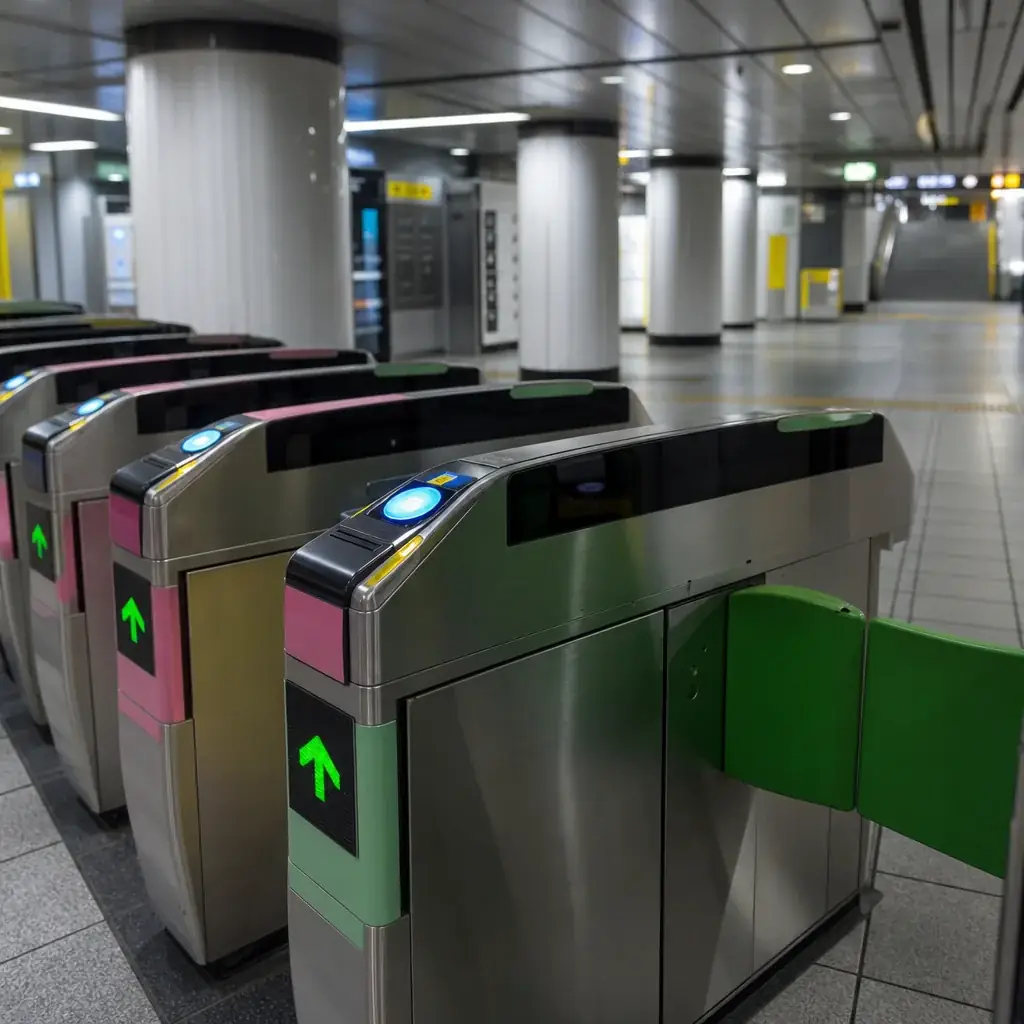
Tokyo’s train system looks complicated because several companies share the same map, but it becomes manageable once you treat it as one connected network and use a navigation app for each trip.
The three main types of trains
- JR lines: Best for many major neighborhoods. The JR Yamanote Line loops through places such as Shinjuku, Shibuya, Ueno, Tokyo Station, and Ikebukuro.
- Tokyo Metro and Toei Subway: Useful for central Tokyo and destinations not directly served by JR.
- Private railways: Connect central terminals with outer neighborhoods and nearby destinations. Examples include lines departing from Shinjuku, Shibuya, Ikebukuro, and Asakusa.
You can transfer between these systems, although changing operators may require passing through ticket gates and paying a separate fare.
Use an IC card
The easiest way to pay is with a rechargeable Suica or PASMO IC card. Tap the card on the gate when entering and again when exiting; the correct fare is deducted automatically.
The cards generally work across JR, subway, and private railway lines, as well as on many buses and at convenience stores.
Physical tourist cards and mobile versions may be available, but availability and phone compatibility can vary. If you cannot obtain an IC card, buy a paper ticket from a station machine. Machines usually offer an English-language setting. For paper tickets, fares are based on destination; if you accidentally underpay, use a fare-adjustment machine near the exit.
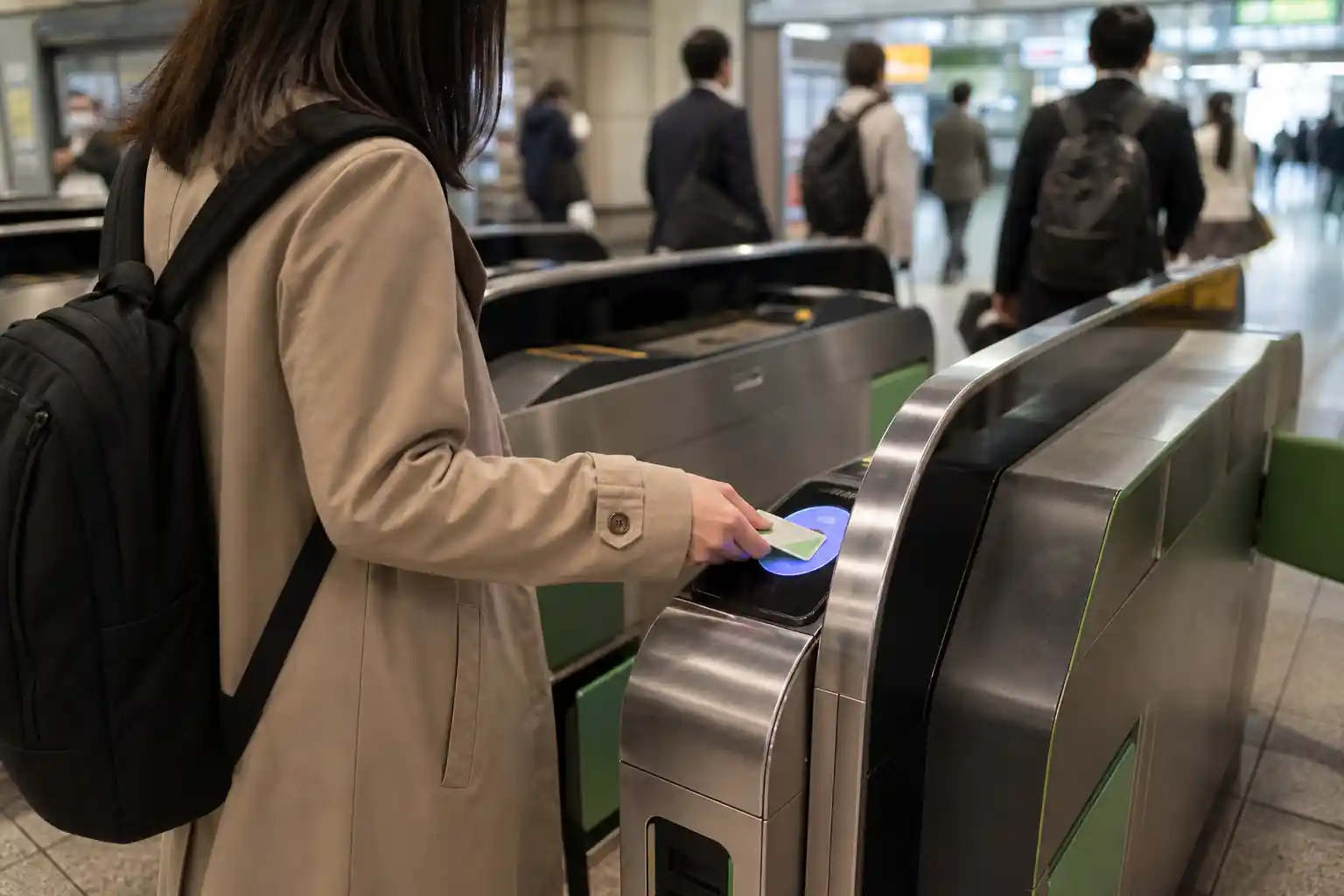
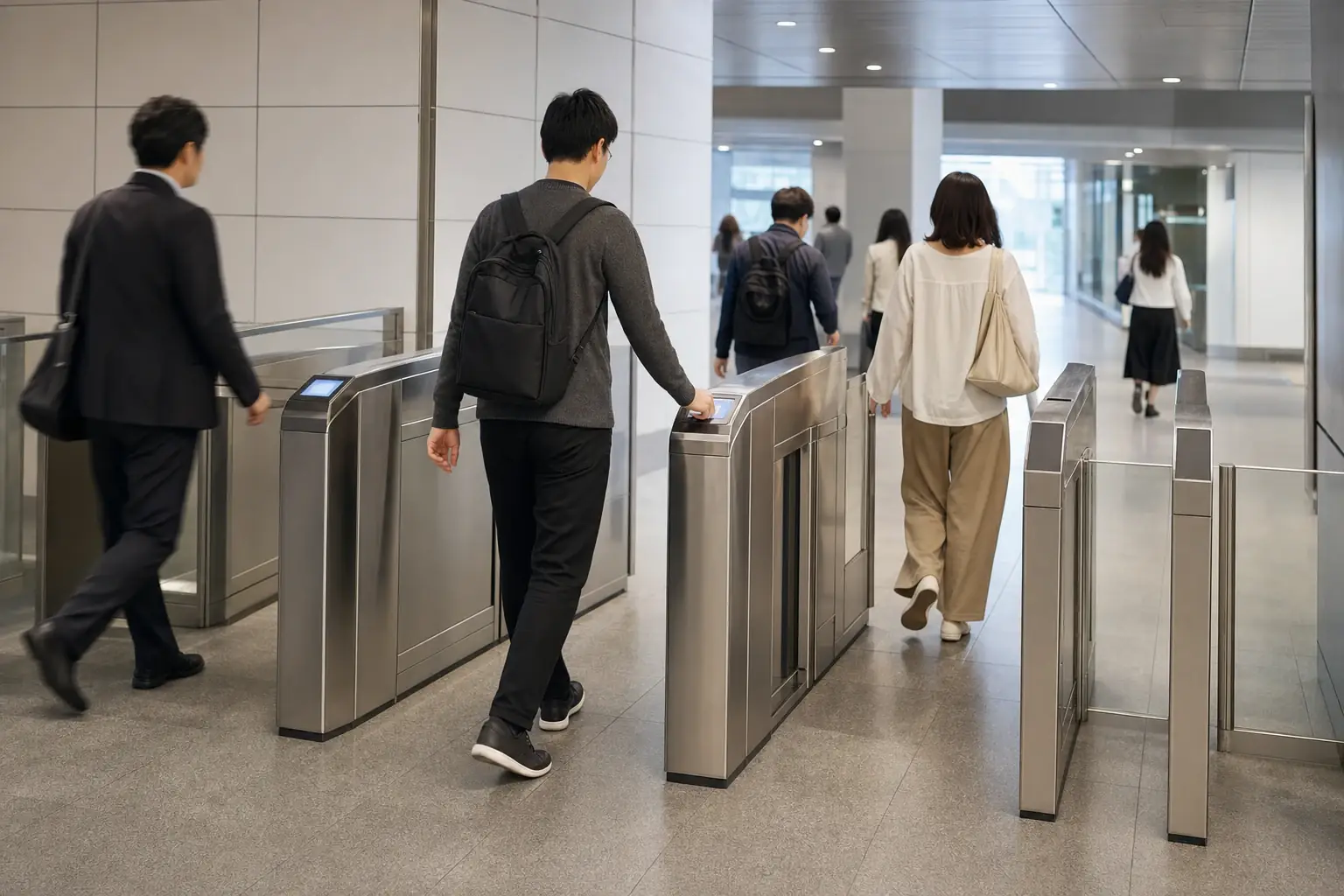
IC cards make transfers across much of Tokyo’s rail network straightforward.
Plan each journey
Google Maps and Japan-focused transit apps can show:
- The correct train and direction
- Departure platform
- Transfer station
- Fare and travel time
- Recommended station exit
- Whether a train is local, rapid, or express
Check the line name, line color, station code, destination direction, and departure time before boarding. Do not rely only on the platform number, because platforms can change.
For example, “Shibuya” alone is not enough: confirm whether you need the JR Yamanote Line, Tokyo Metro Ginza Line, or another service. Large stations can take 10–20 minutes to navigate, so allow extra time.
Navigating stations
Station signs and announcements commonly include English. Stations often have alphanumeric codes, such as a letter for the line and a number for the station.
When exiting, follow signs for the specific exit number or name shown by your navigation app. Choosing the wrong exit at Shinjuku, Shibuya, Tokyo, or other large stations can leave you several blocks from your destination.
At transfers, follow signs for the next line rather than immediately heading toward “Exit.” Some transfers are inside the paid area; others require you to tap out and enter another operator’s gates.
Important train habits
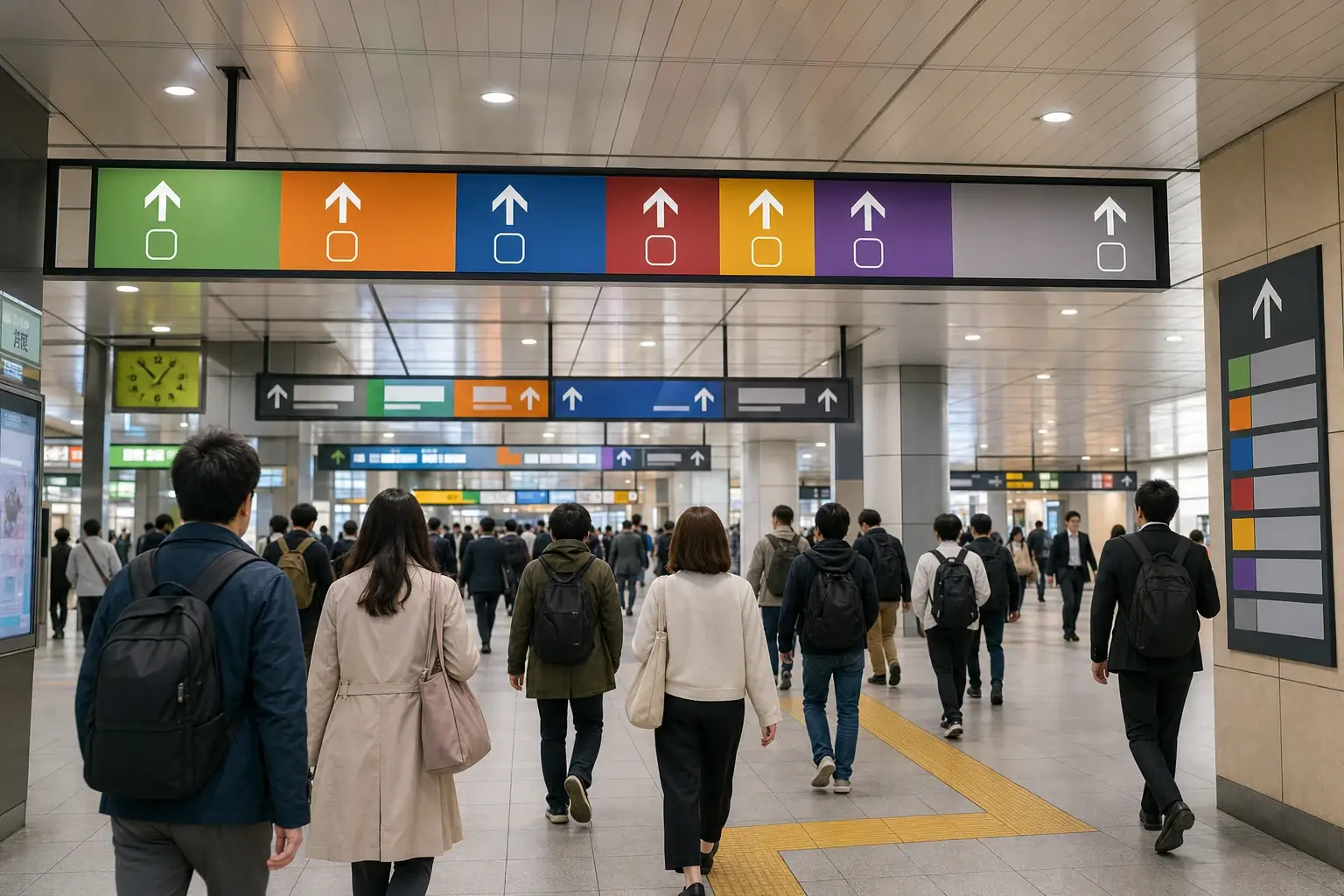
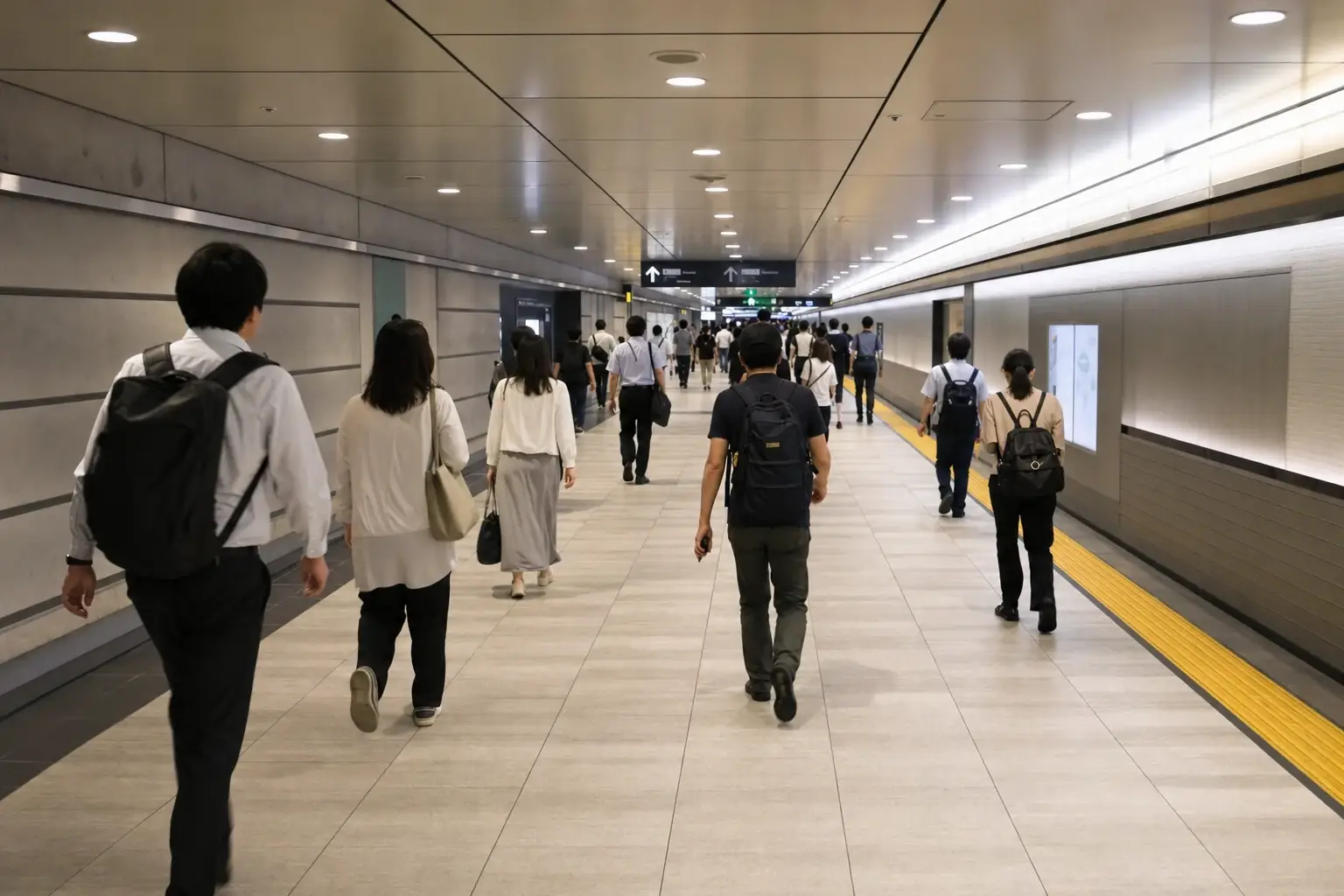
Large stations require careful attention to line, platform, and exit signs.
- Queue at the marked boarding positions.
- Let passengers exit before entering.
- Keep phone calls and loud conversations to a minimum.
- Move backpacks to your front or place them on the overhead rack when crowded.
- Priority seats are intended for older adults, pregnant passengers, people with disabilities, and passengers with small children.
- Some cars are designated for women during specified rush-hour periods; platform and carriage signs indicate when this applies.
- Avoid weekday rush hours when possible, especially roughly 7:30–9:30 a.m. and 5:00–7:30 p.m.
Useful practical advice
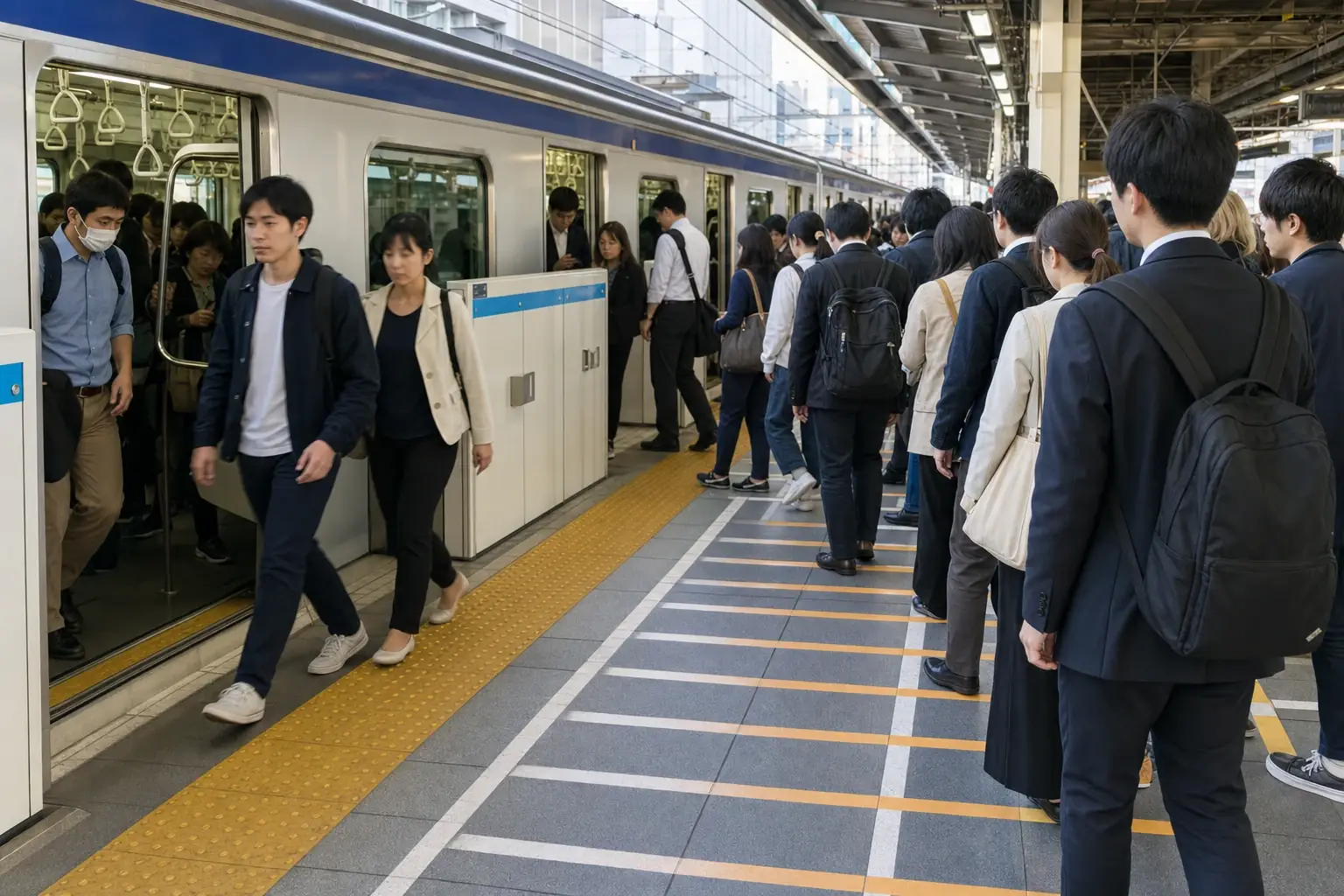
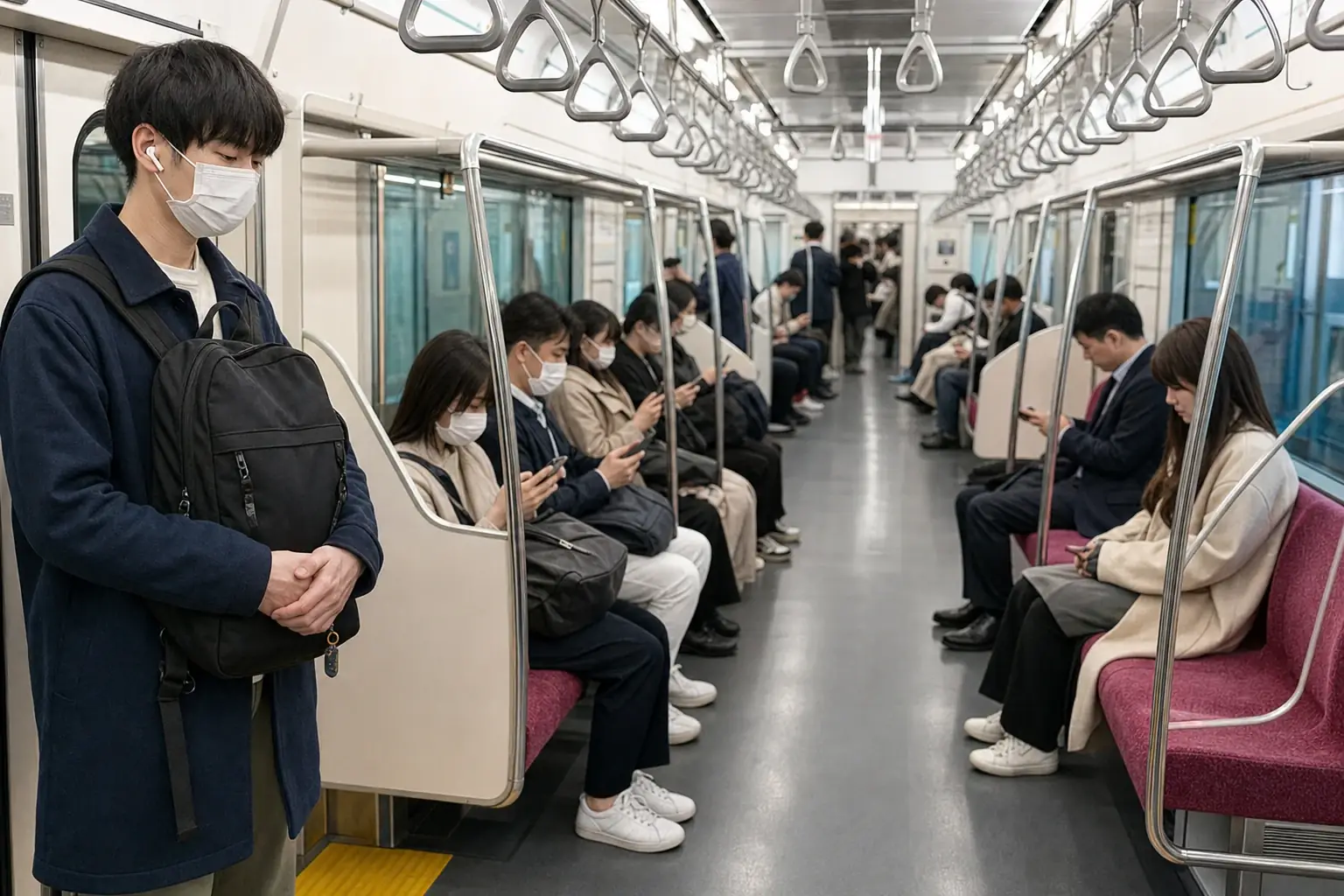
Orderly queues and quiet, space-conscious behavior are standard train etiquette.
Tokyo trains generally do not run all night. Last services are often around midnight, but the exact time varies by route and day. Always check your final connection before an evening out; after the last train, taxis may be the main option.
If you take a rapid, express, or limited-express train, verify that it stops at your station. Some limited-express services also require a separate seat or express ticket in addition to the basic fare.
For luggage, avoid peak periods and use elevators marked on station maps. Lockers are available at many stations, but large ones can fill quickly. Most importantly, save your destination in both English and Japanese so station staff can help if needed.